Back to PortfolioMachine Learning
August 15, 20268 min read
How I Built a US Visa Prediction ML Pipeline
A complete walkthrough of building an end-to-end Machine Learning pipeline with modular architecture, Docker deployment, and CI/CD.
The Problem
Predicting US Visa approval is a classic classification problem. I wanted to build not just a model, but a production-ready ML pipeline that follows industry best practices.
Architecture
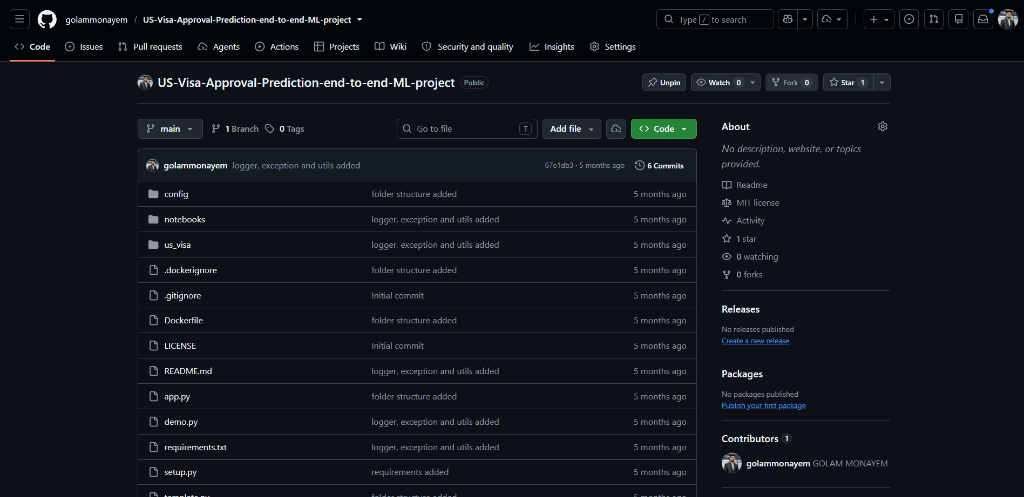
The project follows a modular architecture with separate components for:
- Data Ingestion — Fetching and validating raw data
- Data Transformation — Feature engineering and preprocessing
- Model Training — Training with hyperparameter tuning
- Model Evaluation — Performance metrics and threshold optimization
- Model Deployment — Flask API with Docker containerization
Key Learnings
- Modular code is essential for maintainability
- Custom logging and exception handling saves debugging time
- Docker makes deployment reproducible across environments
- CI/CD pipelines automate the boring stuff
Tech Stack
Python, Scikit-learn, Pandas, Flask, Docker, MongoDB
Building an end-to-end pipeline taught me more about software engineering than any tutorial ever could.

Golam Monayem
Machine Learning Engineer & Visual Designer